
In the 19th century, the biggest part of the Bulgarian peasants in the Ottoman Empire were trapped in debt. Moneylenders charged extreme interest rates—often over 100%, and sometimes even reaching 800%. Borrowing meant survival, but also long-term dependency.
Change came in the 1860s with Midhat Pasha, the statesman and leading reformer, the governor of Danube vilayet, known for his role in the Tanzimat reforms and for promoting modernization and economic development in the empire.
As part of these reforms, he introduced credit funds of public utility (obshtopolezni kasi) — early institutions designed to provide affordable loans and reduce reliance on usurers.
According to some studies, the first credit funds of public utility set up in the Ottoman Empire date back to November 1863 in the town of Pirot. According to others, the first fund was set up in Leskovats on 25th of June 1864, followed by the one established in Niš. In 1865, Midhat Pasha founded such institutions in Rousse, Pirot, Targovishte. During the 1865-1866 period, there were thirty-four credit funds of public utility in Northern Bulgaria, in the Sofia region and in part of Southwest Bulgaria. By 1871, thirteen such institutions were established in South Bulgaria. According to the archives, nonetheless, the efforts of Midhat Pasha to establish similar institutions in the regions populated by non-Christians in Anadolu, Asia Minor, he did not succeed. This provides evidence for the existence of specific conditions in Bulgarian lands stimulating the emergence of the first social credit institutions in the Ottoman Empire.
The credit funds of public utility combined state initiative with social purpose and laid the foundations of what we now call social finance. People’s participation in the capital was compulsory and farmers could not renounce their membership. These institutions lacked the autonomy of governance as in the beginning two Christians and two Muslims were chosen for governors (vekili) and in 1871-1872, a managing directorate was founded.
Raising capital of credit funds was compulsory. After 1864 peasants were obliged to give 5% of the collected cereals to them and after 1873, they delivered annually one-kilogram of wheat (in ‘tsarigrad’ measure). The money obtained from cereals’ sales formed the capital. Later on, part of the collected goods was kept in a common granary, another part was sold, and money was deposited as the institution’s own capital. Money brought in by peasants was their property and their own capital.
Credit funds of public utility were involved mainly in lending operations. The interest rate was determined by Sultan’s firman. Initially it was fixed at 12% year on year but gradually decreased to 9% in 1873. Thereby peasants were provided the opportunity to borrow money, to reduce and break their dependency on moneylenders that made credit funds inclusive and effective.
The credit funds of public utility combined solidarity and state intervention, illustrating how local conditions can give rise to unique forms of economic organization. Midhat Pasha’s reform did not end rural poverty—but it gave people a way out of the debt trap.
References
Marinova, T., Economie sociale et solidaire dans les pays des Balkans. Bulgarie, Roumanie, Serbie : quels enseignements ?, Paris : L’Harmattan, 2021
Gnjatovic, D., T. Marinova, N. Nenovsky, Agricultural cooperative credit in Bulgaria and Serbia from the Ottoman period to WWI: Institutional and comparative history” (with D. Gnjatovic, N. Nenovsky), The Journal of European Economic History, 3/2019: 45-73.
Marinova, T., N. Nenovsky, Histoire et transformation institutionnelle des banques coopératives bulgares de l’Empire Ottoman à la Première Guerre mondiale (с Н. Неновски), Revue internationale de l’économie sociale, 2017, 96 (343): 131-146.
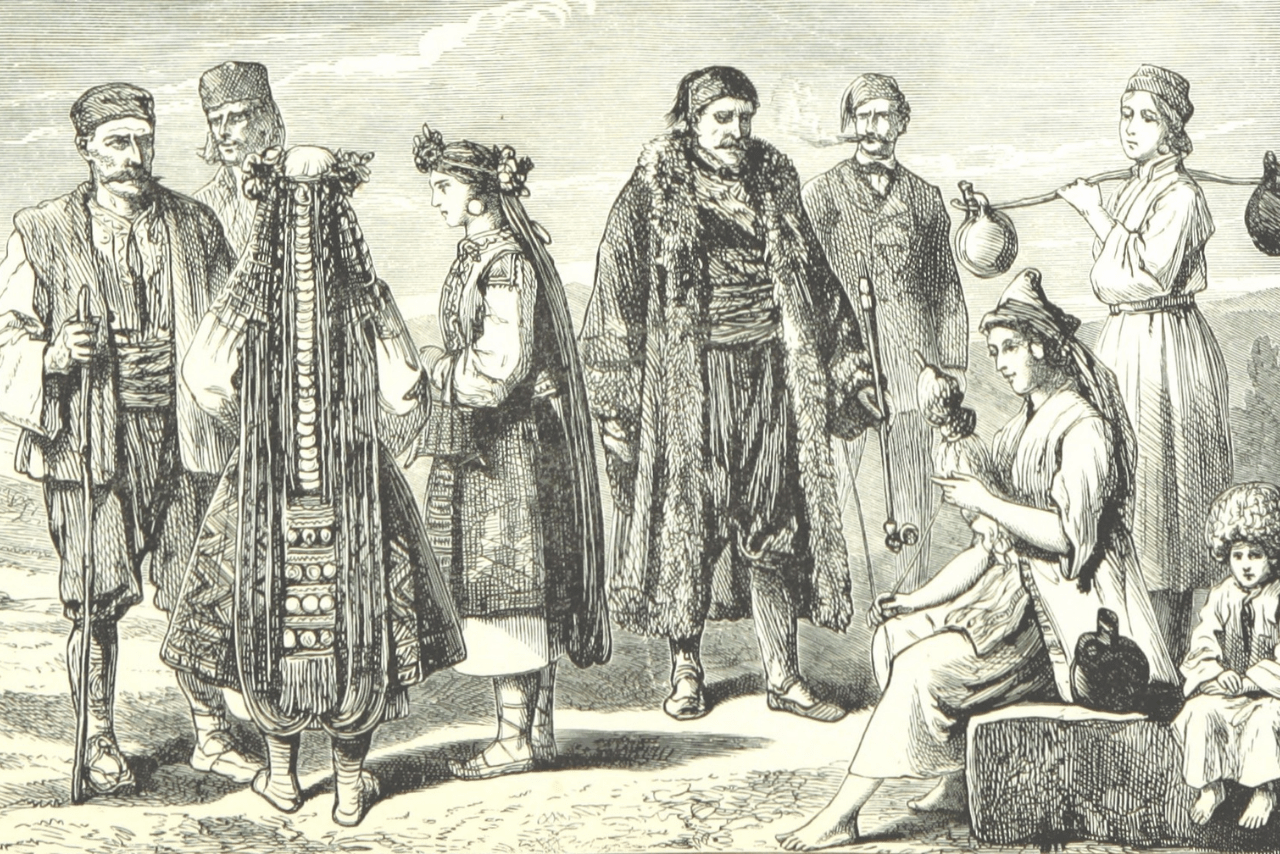
Featured image extracted from page 104 of volume 1 of Travels in the Slavonic Provinces of Turkey-in-Europe, by MACKENZIE, Georgina Mary Muir – afterwards SEBRIGHT (Georgina Mary) Lady and IRBY (Adelina Paulina). Original held and digitised by the British Library. Link